
A recursive story
A book as an object to think with
 This work is deeply inspired by one of the books I enjoy reading the most (because I still do): “Adventures in Modeling” (AiM) by Mitchel Resnick, Eric Klopfer, and Vanessa Colella, all of MIT (Massachusetts Institute of Technology) at the time the book was published in May 2001. The book is about agent-based modeling using a very simple programming language called StarLogo™. In the image, composed by me using the book cover as the background, I am with Mitch during my visit to the Scratch Conference in August 2010, just before attending the Imagination Toolbox workshop. Both events took place at MIT in Cambridge, Massachusetts.
AiM book is organized by challenges and activities. The activities are specially designed to be carried out experientially and without the computer. Each of the activities is followed by a challenge to be solved by creating simulation models that take aspects raised in the activities. These challenges must be solved using the StarLogo™ programming language. The book offers help and guides to complete each challenge that consists of programming a specific simulation model.
Mitch Resnick, in his book “Turtles, termites and traffic jams” reflects on the role of simulation models in education and postulate that he is basically, "more interested in stimulations than in simulations”. The point of this position is that he cares less about how well a model serves the reality it surrogates (for example, an ant colony moving around in search of food) but more about what happens in the mind of the student when he thinks about how an ant moves when looking for food.
Without a doubt, –in the words of Seymour Papert and Sherry Turkle–, the book Adventures in Modeling has been, for me, an object to think with.
We think with the objects we love; we love the objects we think with.
Turkle, S. (2007). Evocative objects: Things we think with. MIT Press.
Connecting the dots
When I was about 15 years old, my father, who was a chemist, told me that his dream was to go to MIT to study rubber technology, his area of expertise. He had received a fellowship from Bayer Company in Germany to take some courses, and his desire was to continue improving, but at MIT, which at that time had the most recognized center in that branch of industry.
At that time, MIT sounded to me like its initials in Spanish: “Emaití” and it meant nothing more than a proper name associated with my father's unfulfilled dream. Unfortunately, my father died young (57 years old), unable to fulfill his dream.
My father often spoke to me about his elder brother, Jorge A. Rizzi (pictured on the left), who was both my uncle and godfather, and someone he deeply admired. He highlighted how, in the 1960s, my uncle founded an organization in Argentina called the Argentine Society for Industrial Organization (SADOI, by its Spanish initials), through which he brought Herbert Simon (who later won the Nobel Prize in Economics) to Argentina in 1971 to deliver courses for senior executives from various organizations.

For me, at that time, H. Simon was nothing more than an economist who had won the Nobel Prize and who had come to give courses to businessmen in my uncle's company, where my father also gave courses. At that time I was a chemistry student not very fanatic, and there was no connection between me and Herbert Simon in the fields of interest of both.
In 1985, when I was in the third year of my Chemistry degree, my uncle Jorge, who at that time had refounded SADOI as the Sociedad Argentina de Orientación Informática [Argentine Society for Technology Guidance], invited me to teach LOGO and BASIC classes there. Like my father (and Herbert Simon), I was also going to teach courses in SADOI...
In that second foundation of SADOI I learned about computers and of course I learned to program in LOGO, the “language of the little turtle”. I had a lot of fun teaching classes and I continued that way until I received my Bachelor's Degree in Chemistry in 1990, the year my father died.
That year I left SADOI, and far from looking for my career horizon between test tubes and Erlenmeyer glasses, I fully embraced what was my passion, and was to become my job to this day: the integration of technology in education. In this way, the key role that my uncle Jorge would have in my working life was confirmed. Still, H. Simon was just a Nobel-winning economist my uncle had brought to Argentina. The dots remained unconnected.
My first trip to MIT: getting to know the StarLogo
In 2001, I was preparing a trip to a conference in the US on technology and education (NECC organized by ISTE). It was an event that I had already attended several times since 1992 and that always caught me because of its immense offer in education and technology. The menu included a very profuse trade show in educational software as well as numerous presentations and talks. To give an idea of the importance of this event, in one of its editions, in 1996, one of the main speakers had been none other than Bill Gates, founder of Microsoft.
I was then preparing the trip to the congress (I had to ask permission from the authorities of the school where I worked) when I read a story in the argentine newspaper La Nación about a course at MIT for Argentine teachers related to science and technology. The invitation came from none other than the MIT Club in Argentina.

The course was called - it is still called that way today - SEPT, for “Science and Engineering Program for Teachers”. When I read the news, I immediately remembered my father (who had passed away 10 years ago) and his unfulfilled dream of going to MIT, and I perceived the situation as a knowing wink from my old man from some remote cloud. I then changed my plans and traveled to MIT for the SEPT course, joining fourteen other Argentine teachers. Together, we formed a group and adapted the SEPT course model for Argentina (see the newspaper article on the left).
The experience was outstanding, academically talking, but beyond that, the mere fact of walking through the halls of MIT, looking at its showcases full of history, inventions, discoveries, effort and talent, evoking the memory of my father and photographing me in front of the dome of the famous Killian Court, made those days an unforgettable experience for me.
The course consisted of listening to MIT researcher who told what topics they were working on and seeing a bit of "the crest of the wave" of research in science and engineering.
So far nothing very connected to my teaching work in a secondary school, but closing day (Saturday), it had a different flavor. That day we worked on an activity where we were presented with “educational” software called StarLogo, created by Mitch Resnick and a direct descendant of the little turtle LOGO created by the team led by Seymour Papert within MIT itself.
The funny thing was that we couldn't work with the computer but they showed us the software on a computer and projected it in front, and instead we did some activities where we were asked to clap individually until we reached unison, or to think about a secret number and whispered it to a classmate while walking around a wide space blindfolded.
Then they explained the meaning of these activities, they talked about "the local and the global", "complexity" and "agents", but the truth is that at that moment I did not pay much attention and I did not get to understand the essence of those concepts.
I already knew the LOGO language and had worked with it, so for me it was just a new version of the same language that I knew. Time was going to show me how true it is that the most difficult thing is not to learn but to unlearn what one already knows...
My second trip to MIT: The new version of StarLogo
Almost ten years later, in 2010, my passion was simulation models (“simulators”) applied to science teaching. I was constantly scouring the web for new simulators made by American software companies or new tools that would allow me to build them.
But I was also working on a pedagogical framework brought over from Harvard called “Teaching for Understanding” and the possibility arose of joining a one-week course at the very same Harvard Graduate School of Education.
It was “The Future of Learning”, a one-week course to think about learning in light of new technologies, advances in knowledge of the mind and brain, and globalization.
I was going as a scholarship student, sharing the "small table" with nothing more and nothing less than two of the most important educators of recent times: Howard Gardner and David Perkins.
When I was preparing my trip to Cambridge, Boston to attend the course at Harvard, something curious happened: I received an email saying that the week after I finished the course, at MIT, next to Harvard, there was going to be a course about StarLogo TNG, a new version of the StarLogo that I had met in 2001 on my first trip to MIT on the occasion of SEPT.
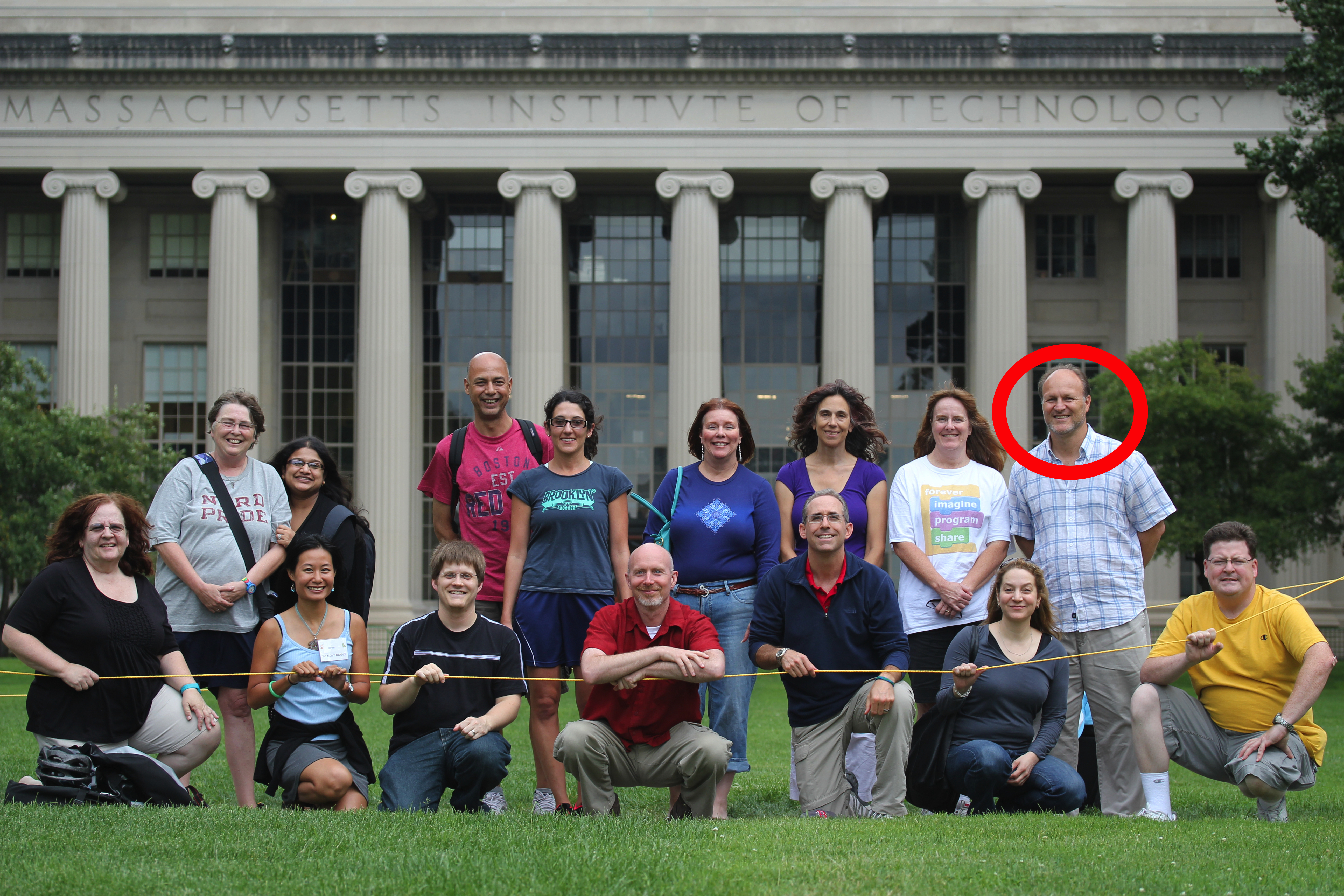
Fig. 3: Imagination Toolbox workshop at MIT (2012)
This new version of StarLogo (TNG, "The Next Generation"), was in 3D and allowed to create simulation models and video games. In addition, the registration for the course was very cheap and the hotel was subsidized.
I thought I couldn't pass up the opportunity that the planets had aligned in this way and I immediately signed up for the course. Spending a week at Harvard and the next at MIT taking courses was an educator's dream.
The package was to be completed with a two-day conference on Scratch, a programming language for children created by Mitch Resnick, who was the creator of StarLogo as part of his doctoral thesis (with Seymour Papert as tutor).
And the long-awaited time came to travel for two weeks to Harvard and MIT for my courses.
The Harvard course was incredible, I really enjoyed it and learned a lot, but the StarLogo TNG course marked the connection of the dots in this story in a particular way.
StarLogo: complexity and emergence
StarLogo TNG (SLTNG) turned out to be much more than a LOGO language for creating video games. SLTNG is a language for programming agent-based models, a technology created to study, among other things, complex dynamic systems or emergent systems.
The activities of clapping in unison and whispering numbers into the ear of close colleagues that I had done in the SEPT on my first visit to MIT now made sense. These were participatory simulations where the objective was for us to feel like “agents” who followed simple rules on an individual level (such as clapping) to create more complex patterns such as coordinated clapping without anyone being in charge. It is what Resnick calls “decentralized systems”.
These behaviors are what explain various phenomena of nature such as termites, which by following very simple rules and without anyone guiding them, build their nests of great complexity and sophistication.
From that course, I began to understand that the phenomena that were simulated with SLTNG always responded to this pattern of emergence, with various "agents" following simple rules to create more complex patterns of emergence, such as the spread of epidemics, the predator-prey ecosystems or the climate system.

I was hooked on the issues of complexity and emergence almost as much as the one on simulation and began to read more about them. Thus I found an interesting intersection with the social sciences through authors such as Morin, Lewin, Schelling, Steven B. Johnson and others.
I read about the work at the Santa Fe Institute, New Mexico, by Robert Axelrod, Murray Gell-Mann, Stuart Kaufman, and other celebrities in the complexity sciences.
And I discovered that in addition to natural science phenomena such as epidemics, bacterial growth and ecosystems, computer programs such as SLTNG also made it possible to model social science phenomena such as Schelling's model of segregation or the flow of changes in the exchange market, until among the theoretical referents a totally unexpected author appeared…. Herbert Simon!
It turns out that Herbert Simon had been one of the pioneers in the study of artificial intelligence (AI), the same branch of science that Seymour Papert studied with Marvin Minsky at MIT and that gave rise to LOGO (and AI science too).
In fact, the LOGO language was inspired by the LISP (List Processor) language, created by none other than John McCarthy, a mathematician from MIT who is credited with coining the term “Artificial Intelligence” during the legendary summer meeting of 1956 at Dartmouth College. Ten attendees were invited to this cornerstone Artificial Intelligence meeting, where the term was formally coined, including Herbert Simon and Marvin Minsky.
The dots were beginning to connect!
Herbert Simon and the missing link
Finding Herbert Simon's name while reading about emergent behavior was exciting to tears, although that was not to be all.
When I found Simon's name, something crazy instantly occurred to me: to search the web for evidence of the connection between Simon and SADOI (the company that my uncle had founded in Argentina and where I had started teaching classes on LOGO) during his visit to Argentina in 1971 (invited by my uncle) about which my father told me so much.
Imagine the madness of trying to find traces of information about something that happened 50 years ago in Argentina!!!
The task loomed as complex (never better used this adjective 😊), since Simon's visit to Argentina, with my uncle Jorge A. Rizzi as his host, was 25 years before the Internet explosion, and 27 years before the creation of the search giant.
I typed the terms in quotes as I present them here, and pressed ENTER almost without hope, but something magical and unexpected happened.
It turned out that Carnegie Mellon University (where Simon was a professor for several years) compiled his personal correspondence, notes from his conference talks, articles, and more building the Herbert Simon Digital Collection.
Within this collection I found several letters between my uncle Jorge Rizzi and Herbert Simon on the occasion of his trip to Argentina. They were typewritten letters that even included Simon's handwriting. In fact, I found 24 occurrences when searching for the keyword “SADOI” in that collection, which can be found here: Carnegie Mellon Herbert Simon Digital Collection.
There, I found notes from the talks that Simon gave at SADOI, one of which was entitled: “Social implications in the advancement of information technologies”, in 1971!
I was overwhelmed with excitement and the dots kept connecting. In one of the letters, Simon asked my uncle to introduce him to the famous Argentine writer Jorge Luis Borges, who at that time was the Director of the National Library in Argentina.
The meeting came to fruition and in the same search on the web I found an article published in Primera Plana magazine with the dialogue between the two, with the copyright of SADOI. I put the link here in case the reader is interested in said text (unmissable): https://goo.gl/hcSV6M
Herbert Simon and Jorge Luis Borges: meeting in the labyrinth
For the meeting between Borges and Simon to materialize, the latter wrote a formal letter to the writer in which he introduced himself as follows:
By profession I am a social scientist who tries to understand human behavior by building mathematical models (or, more recently, with computer simulations).
Here you can see a digital snapshot of the document and a link to the document itself:
 Fig. 4: Screenshot from Carnegie Mellon Digital Collection
Bingo! Herbert Simon was no longer the cool Nobel-winning economist but a pioneer of artificial intelligence whose work was also related to simulation models!
Even Borges himself, in a section of the dialogue, speaks to Simon about Babel as "...a library where all the books written”. The connection is very clear and I will not be the first or the last to draw the parallel between this idea of Borges and the Web, with Google as the omnipotent librarian.
To complete this story, it is necessary to mention that one of the most interesting structures of LOGO programming is the idea of “recursion”: a program that calls itself.
This is an idea present in nature through fractals, and also in this particular story of my life, which starts with my uncle giving me my first computer job at SADOI, continues with my father telling me about Simon in SADOI and MIT, to arrive at the connection between Simon's ideas and simulation models and returning to a descendant of LOGO (StarLogo) as a tool to think about decentralized phenomena. Analyzing this sequence of events, with its undoubtedly recursive characteristics, made me think of a disturbing idea: Will my life be just a sub-procedure within a LOGO program?

Fig. 5: My recursive story linking my father, the MIT, StarLogo, my uncle, Herbert Simon, SADOI and computer simulations.
My last visit to MIT and a special date
In my trips to MIT (2001, 2010, 2012, 2016 and 2023) I had the opportunity to work closely with the versions of StarLogo TNG and NOVA, which I both translated into Spanish.
I conducted StarLogo workshops within the current Klopfer group (The MIT Scheller Teacher Education Program) and attended conferences on Scratch, Resnick's post-StarLogo project.
After nearly a quarter of a century since AiM book’s publication, new tools have replaced StarLogo™ (StarLogo TNG, StarLogo NOVA, Cellular, Scratch and others) and for some time I have been waiting, with the illusion of a child, for the day when that Amazon recommend me the new book: “New Adventures in Modeling”, where new activities and challenges are proposed using these tools.
But since that hasn't happened yet, I decided to be the protagonist myself, and write the book that I would like to read today.
That's how it's born “New adventures in Modeling”, a set of stories that I have been collecting from articles in newspapers and magazines, connected with natural events, which give rise to programming challenges that can be solved using StarLogo NOVA.
In the 80's, when computer technology began to be used in educational institutions (hand in hand with LOGO), programming was at the center of the scene. Then office applications began to appear (word processor, spreadsheet, multimedia presenter) and it was no longer necessary to know how to program.
Already in the 21st century, especially from the beginning of the second decade, and by the hand of a successor to LOGO, Scratch, a group of organizations (CODE.ORG) began to highlight again the importance of programming ( “program not to be programmed”, Resnick) as part of a set of skills encompassed under the umbrella of “computational thinking” (Wing, 2010).
Computational thinking is an approach to problem solving that uses certain skills such as abstraction; pattern recognition; the separation into parts; and algorithmic thinking.
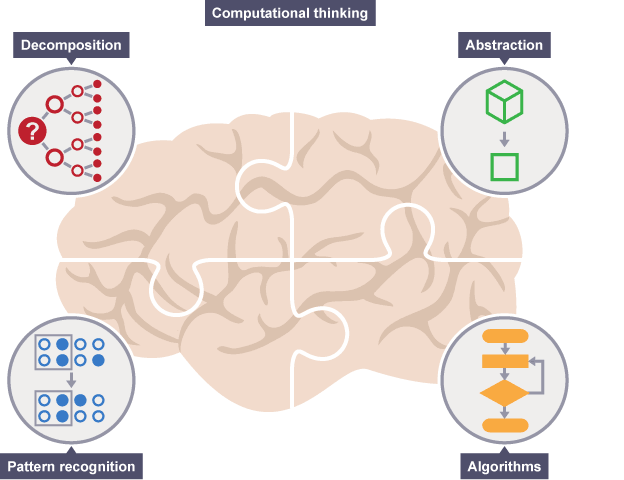
Fig. 6: Computational Thinking components (credits: BBC).
Computational thinking is not something that "one has", it is a capacity that is developed and that inevitably incorporates information processing agents such as computational algorithms.
The programing it's not computational thinking, but it helps to develop it, and some studies even suggest that the development of this ability should occur within the framework of the disciplines, since when a student programs something related to a biological phenomenon, for example, they learn more about computational thinking and also learn more about biology (Sengupta, 2014).
This book tries to walk this path, using real-world phenomena linked mainly to science, to try to model some of them, and in that way develop computational thinking, while learning more about the disciplines associated with each particular challenge.
Although the themes of each chapter are mainly connected to the STEM area (Science, Technology, Engineering and Mathematics), I have no doubt that other teachers from other areas will find links with their disciplines.
StarLogo NOVA is the natural candidate to address the simulations and stimulations that we intend to share in this book, in addition to being a 3D tool, extremely powerful and versatile, has an agent-based approach, is available in Spanish and has an adequate degree of maturity so that any teacher or student can use it.
I hope you can enjoy reading this book as much as we did writing it.
No Comments